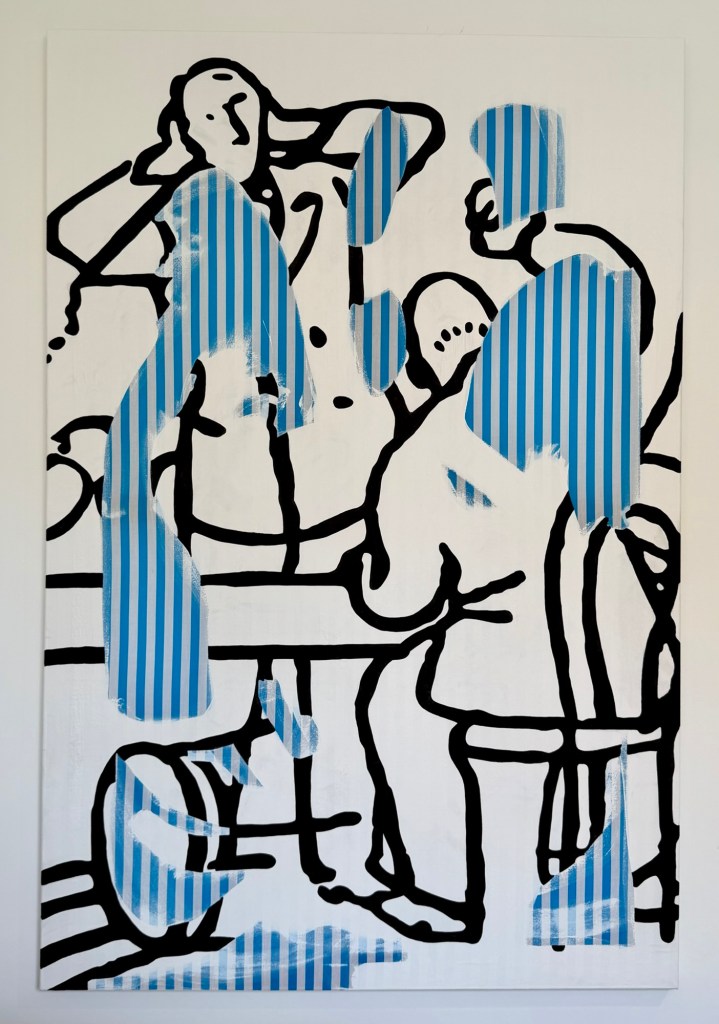
To reduce to the most basic physical and visual elements through the systematic repetition of motif.
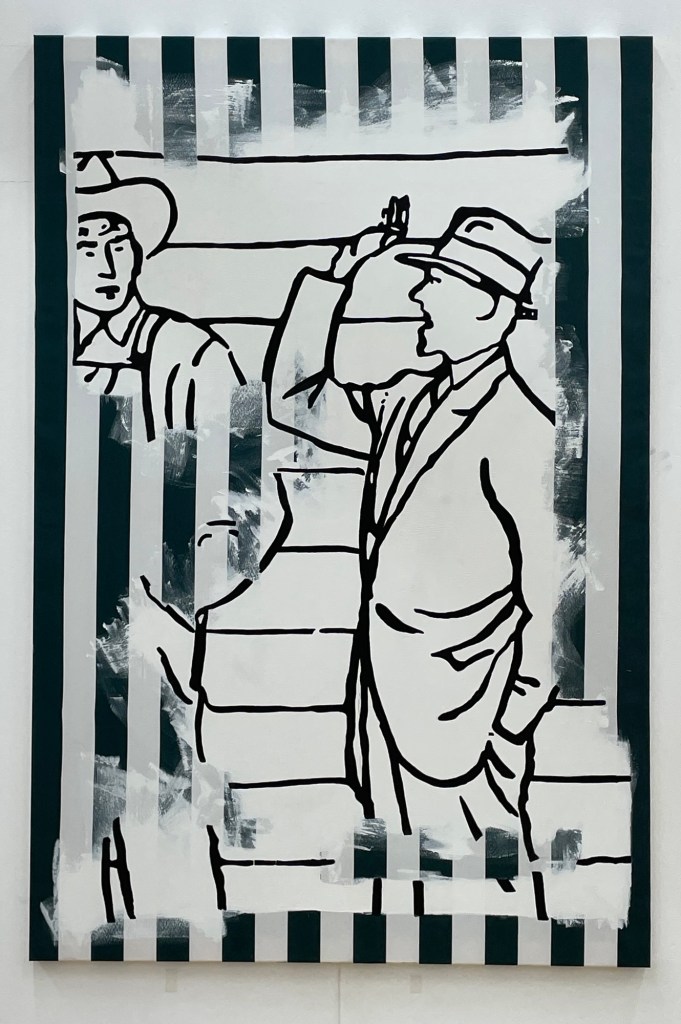
These works begin with commercially produced striped fabric. The stripes are not painted. They are purchased — a pre-existing visual order, repetitive and indifferent. The surface was already there before the work arrived.
The drawings are derived from a cartoon adaptation of a political text — condensed for mass circulation in 1945, distributed by a corporation, the argument made image, the image made pamphlet. Their captions have been removed. What remains are gestures — posture without speech, authority without explanation.
White gesso is applied directly onto the fabric. The drawings are confined to the gessoed areas. Stripe and gesso operate in tension. One is continuous and regulated; the other contingent and applied. At their boundary, the image fragments. No element fully resolves the other.
The work does not present an argument. It examines how authority takes form, how it persists structurally, and how images function when language is withdrawn.
Repetition remains. Gesture remains. Certainty does not.
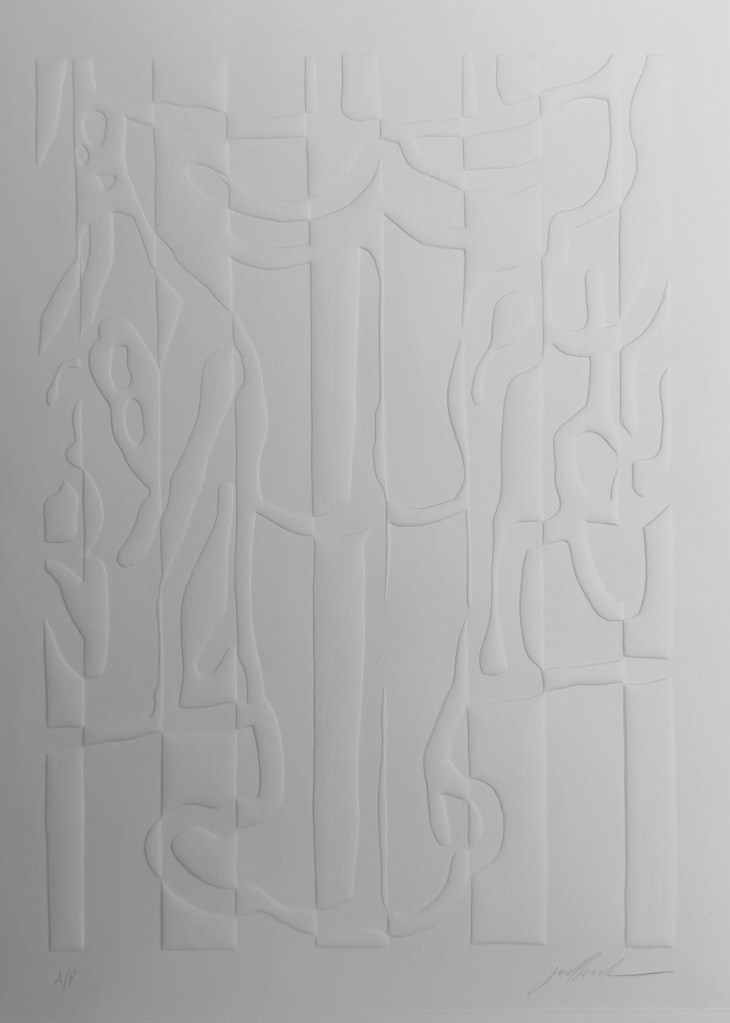
Here, the image and stripe are rendered entirely through blind embossing — present as pressure on the surface, visible only when light catches at the right angle. The figure operates across the composition in both positive and negative space, sometimes raised, sometimes recessed within the stripe’s intervals. Neither element resolves the other.

