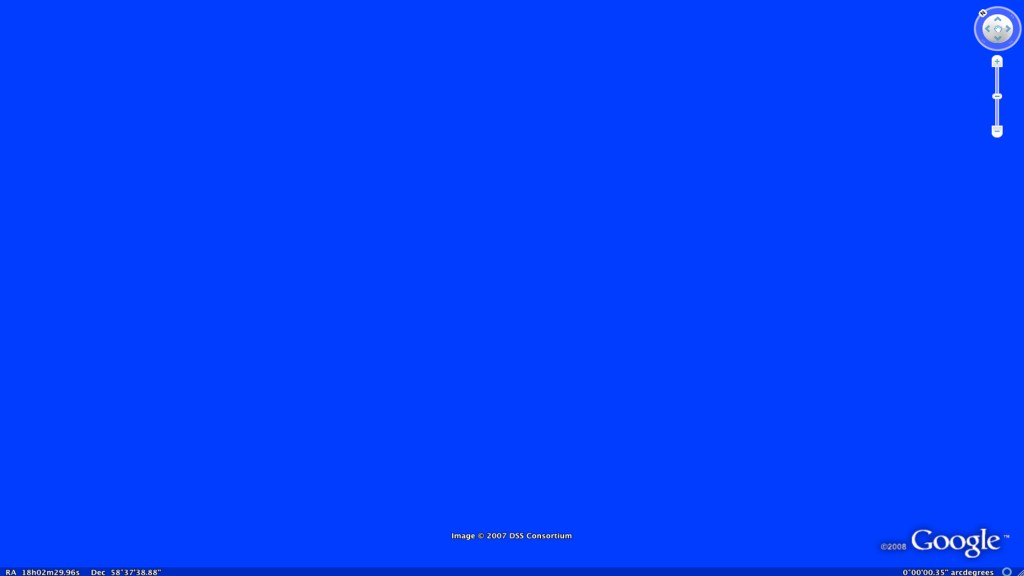
This single-channel video pairs sequential digital screen captures with temporally manipulated audio. The visual component consists of screenshots generated by directing the Google Earth application’s camera away from the rendering of the planet and into the digital void of “space.” This navigation produces flat, monochromatic color fields that deliberately retain the software’s native navigational UI and copyright watermarks. The accompanying audio—a recognizable science-fiction television theme—is temporally stretched to exceed eleven minutes. This extreme deceleration degrades the original composition into a sustained, low-frequency acoustic drone that dictates the rhythm of the shifting monochromatic frames.
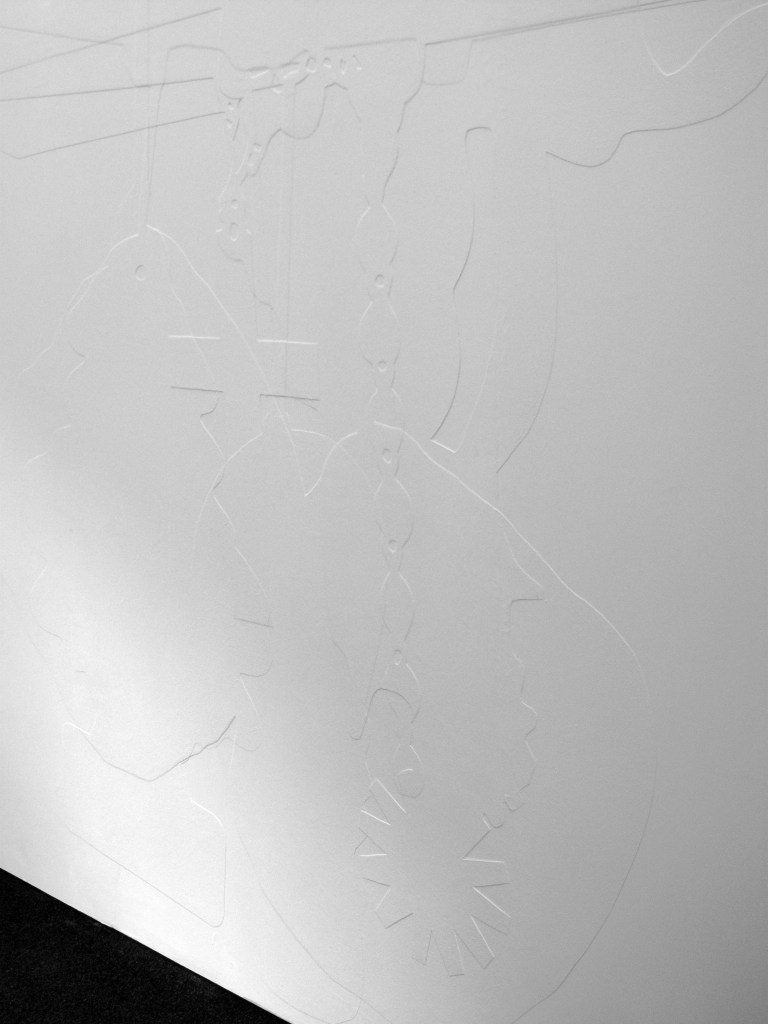
This site-specific relief translates aggregated digital search results into a physical, topographical surface. The source material consists of varied images of objects suspended from automotive rear-view mirrors, retrieved entirely via automated search engine queries. This digital data is materialized through the stratigraphic accumulation of hundreds of successive layers of white emulsion paint applied directly to the gallery wall.
The repetitive, manual process flattens disparate digital artifacts into a single, monochromatic simulacrum, systematically erasing the original referents. Legible only through cast shadow and structural mass, the relentless layering of pigment constructs a monolithic void—a physical manifestation of absolute, encompassing whiteness. The final composite image operates not as a traditional painting, but as a topographic record of temporal absence, visual interruption, and perceptual gaps.
 jameshrobertson.com